
Abney Park Cemetery
North London’s wildest cemetery
Last week, I paid a quiet visit to an American-inspired garden with nearly 200,000 other people.
I should probably mention that all of those other people are dead.
Abney Park Cemetery is a historic cemetery in Stoke Newington, a village-turned-neighborhood in north London. Now a public park open to occasional burials, its location, cultural context, and history make it potentially the most unique cemetery in London.
Some historical background
Thanks to a variety of factors, Abney Park Cemetery comes with a veritable soup of historical context that I need to cover before getting to the cemetery as it exists today. Each ingredient may seem a bit disjunct, but I promise it’ll all come together by the end.
The Magnificent Seven
In the early 19th century, London’s population, both living and dead, was booming. Historically, people had been buried in local parish churchyards, but, after hundreds of years, these were extremely overcrowded. Repercussions of these packed churchyards included major epidemics caused by decaying matter entering the water supply, inadvertent rediscovery of unmarked graves while digging for new graves, and sewer rats “defiling” bodies after infiltrating cemetery drains from central London’s many rivers-turned-sewers. As these problems exacerbated, (living) people began looking for solutions that would improve sanitation and still provide suitable resting places for the dead.
In 1804, Père Lachaise Cemetery, the world’s first garden cemetery, opened in Paris. Parisians had been facing the same graveyard overcrowding problems as Londoners, and, in response, began establishing large cemeteries in what were then suburbs of the city. English gardens were a major trend across western Europe at the time, and the novel combination of garden and graveyard created a new kind of outdoor public space in the days before public parks.
Many English tourists visited Père Lachaise soon after it opened and recognized it as the ideal solution to their own putrid problem. Finally, in 1832, Parliament passed the Metropolitan General Cemetery Act, which encouraged the establishment of new cemeteries in “open Situation[s] adjacent to the Metropolis” due to insufficient space available within the area considered to be London1 at the time.
Quickly following the passage of the act, many of its proponents got to work establishing suburban garden cemeteries in the outskirts of London. The seven largest cemeteries that owe their existence to the act were later dubbed the “Magnificent Seven” by historian Hugh Meller in 1981 after a 1960 Western film.2 The oldest of the Magnificent Seven, Kensal Green Cemetery, opened in 1833, and the newest, Tower Hamlets Cemetery Park, opened in 1841. The Seven form something of a loop around London, though these days the city has swallowed so much more land that they are all far more urban than they used to be.
Abney Park Cemetery was the fourth cemetery established of the Seven, and it’s something of an odd duck amongst its more traditional brethren.
Stoke Newington and its Dissenters
Up until quite recently, Stoke Newington was barely considered to be part of London. It had a reputation for a village-y feel that distinguished it from its more urban neighbors, though these days it has finally been subsumed by London via urban sprawl.
Stoke Newington was originally a manor owned by St. Paul’s Cathedral, and its boundaries have remained roughly the same since at least its 1086 recording as “Neutone” in the Domesday Book. In the 17th century, the manor was sold to William Patten, who became the first Lord of the Manor of Stoke Newington. The manor passed down through his descendants until the late 18th century, at which point it was parceled and sold to various buyers.
Due to their relative seclusion from yet proximity to the City of London, Stoke Newington and its neighbors became home to many English Dissenters (non-Anglican Protestants, also referred to as nonconformists3) and their academies in the 17th century. Non-Anglicans were functionally barred from most higher education, most significantly the Universities of Oxford and Cambridge, at the time, so the Dissenters took matters into their own hands and established their own schools. Among these schools were multiple schools for girls, including one founded by Mary Wollstonecraft in 1785.
The houses and their garden
The land the cemetery now stands on originally comprised the grounds of two mansions: Abney House and Fleetwood House.
The houses
Abney House was originally the manor house of Stoke Newington. Mary, Lady Abney inherited the house in 1701 after her brother died, and she and her husband began splitting their time between their mansion in Hertfordshire and what became known as Abney House4 in Stoke Newington. After her daughter Elizabeth’s death in 1782, the house was sold and served a variety of purposes, ending its life as a Methodist training college. The house was torn down in 1843, and its remnants were sold as building materials.
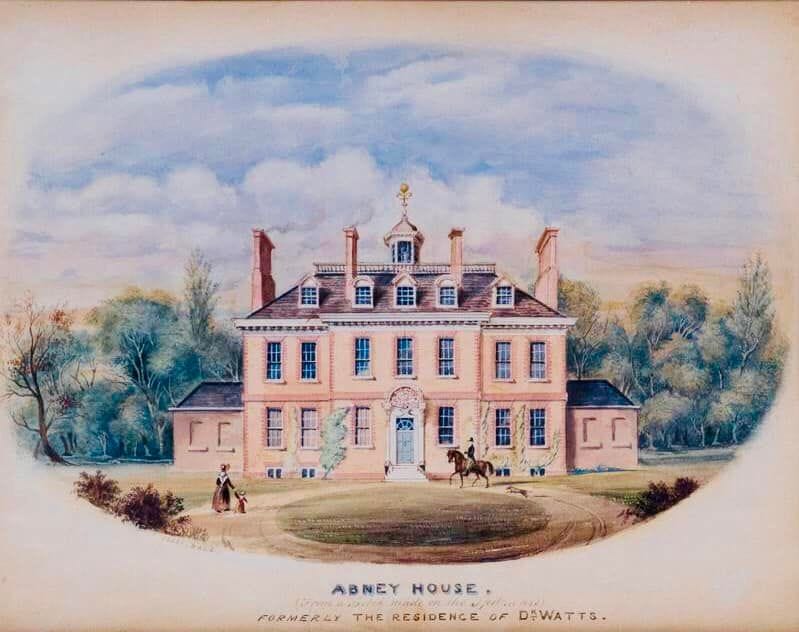
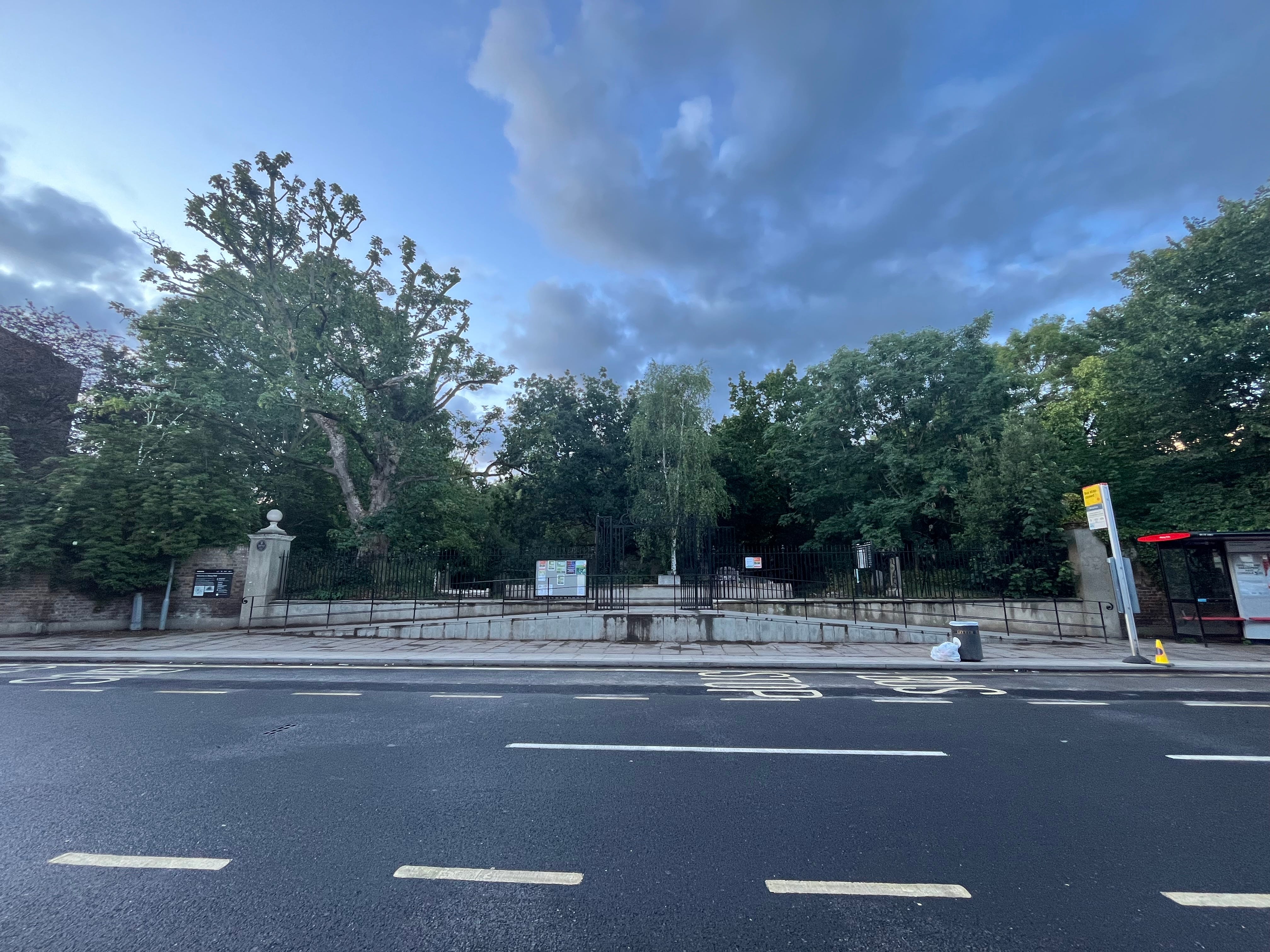
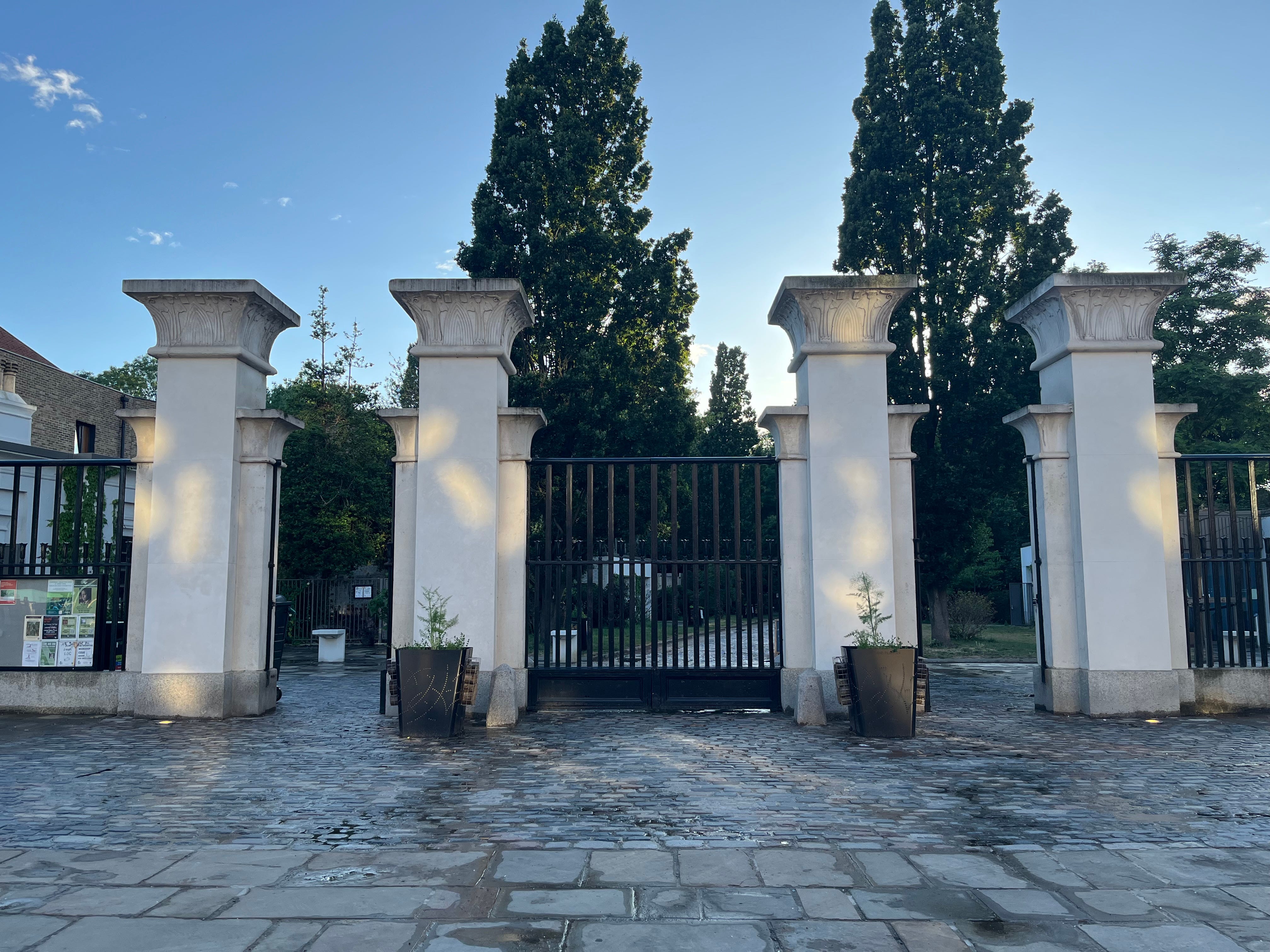
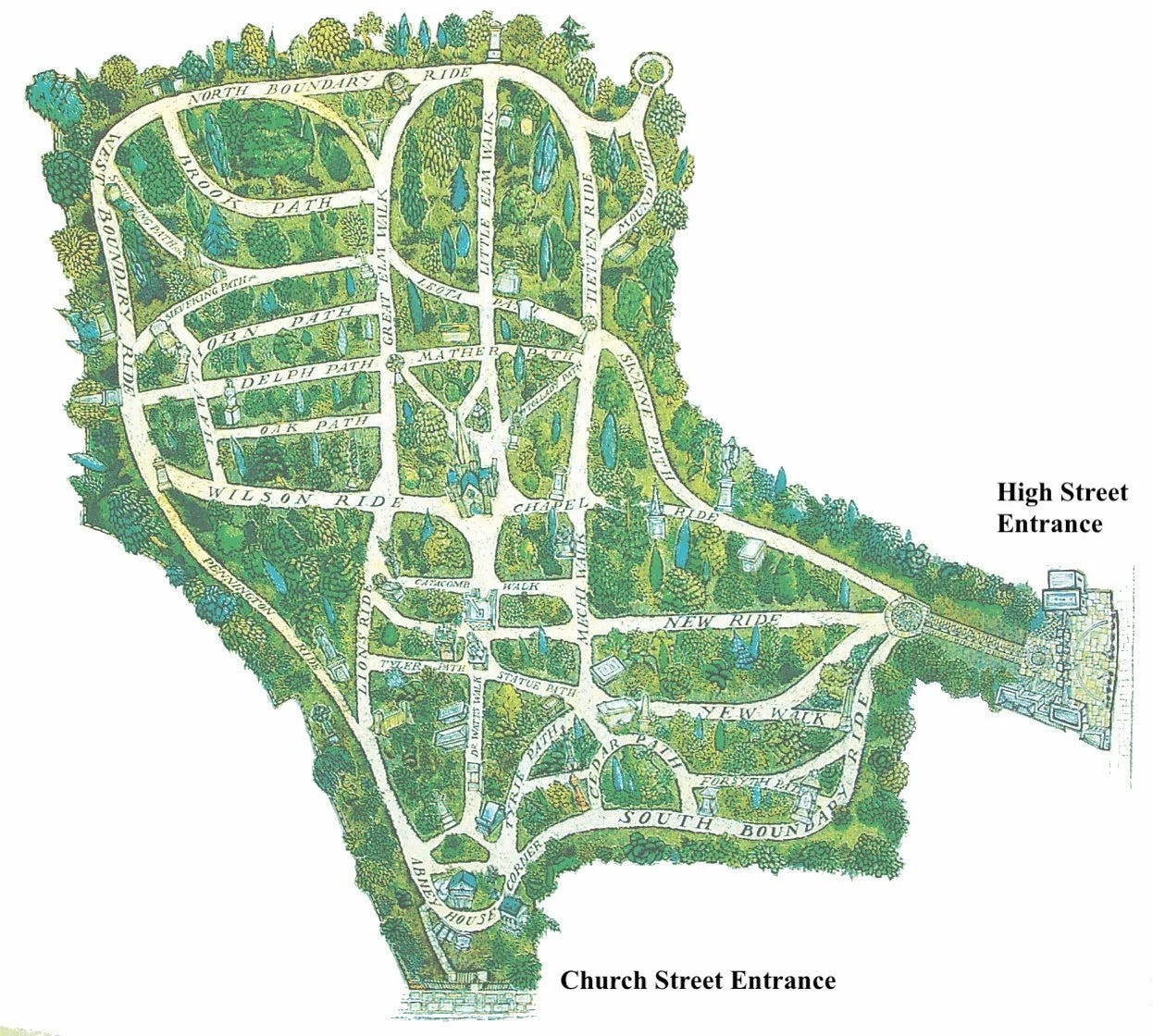
Shortly after its demolition, the land Abney House stood on was incorporated into the cemetery. All that remains of the house is its gates, which now serve as a secondary entrance to the cemetery.
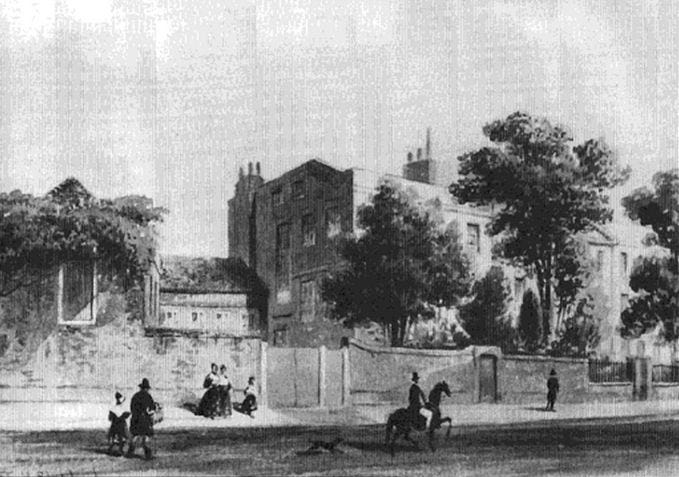
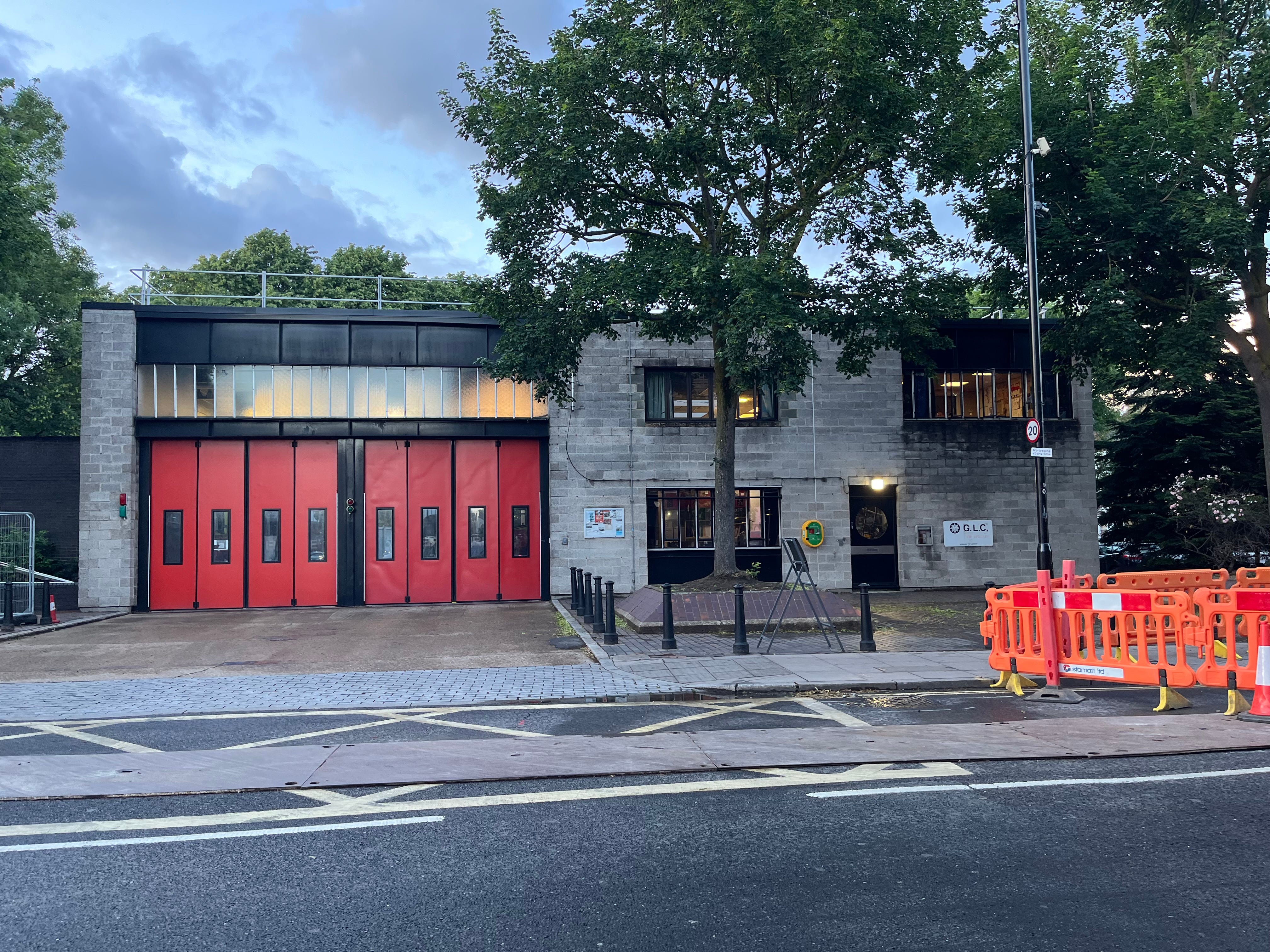
Fleetwood House, though built in the 1630s for Sir Edward Hartopp, was named for Charles Fleetwood,5 who inherited it by marriage in 1664. The house was a regular meeting place for Dissenters, and it remained in the Fleetwood family until 1766. After they sold it, the house was occupied by a variety of others until 1824, when it became the Newington Academy for Girls. The Academy was one of many Quaker6 schools in the area, though one of very few specifically for girls, and is most famous for being the school for which the school bus was invented. The school closed sometime before 1872, when the house was finally demolished.
Today, a fire station stands on the site of Fleetwood House.
Dr. Isaac Watts
In the late 17th/early 18th century, a nonconformist pastor by the name of Dr. Isaac Watts took work as a private tutor for the Hartopp family residing in Fleetwood House. During his employment, he met the next-door Abneys, and eventually was invited to stay with them as a house guest. Watts ended up living with the Abneys for a total of 36 years, during which time he became known for his exceptionally prolific hymn writing.7
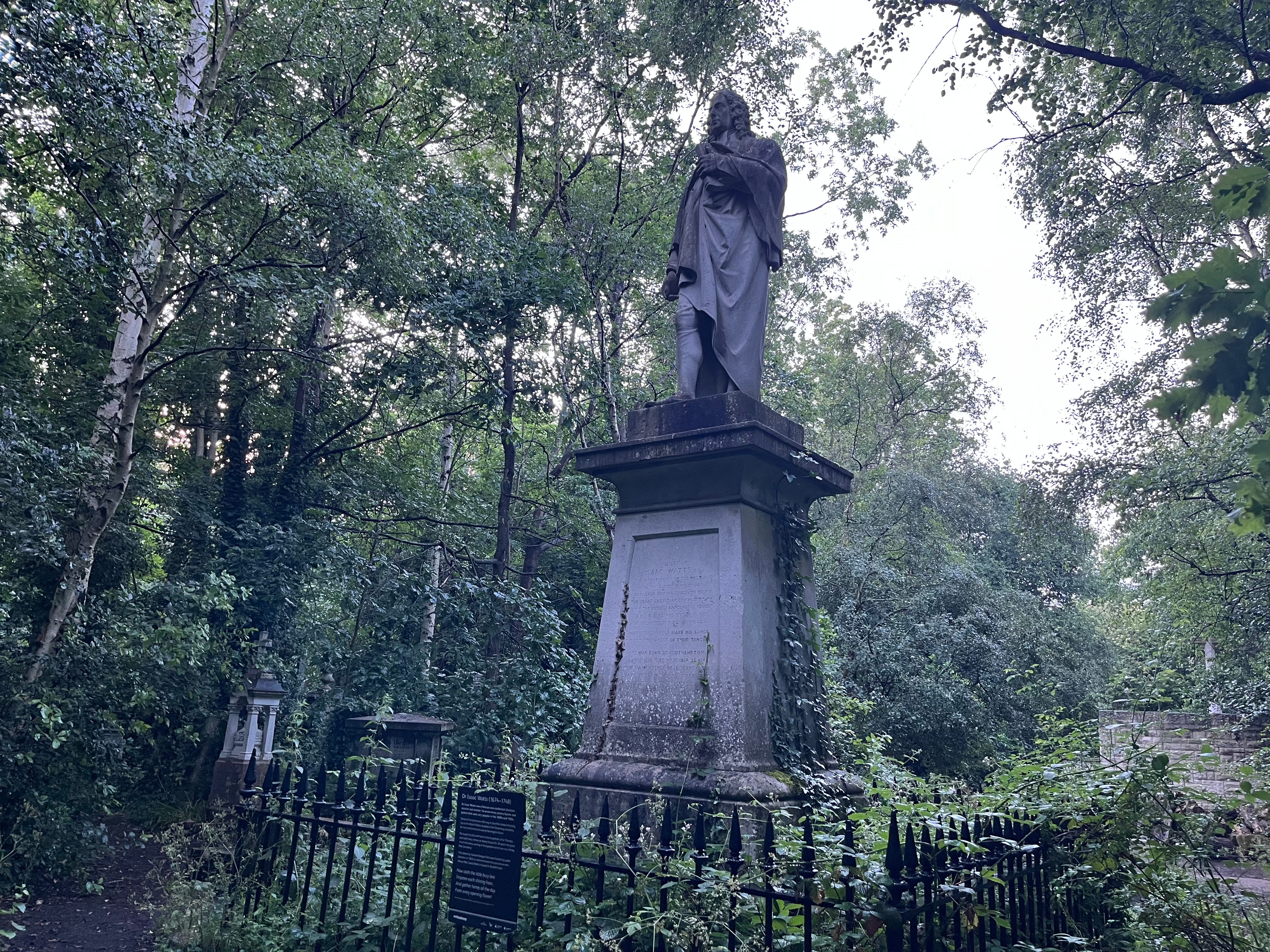
Thanks to his hymns and other works, he became a particularly well-known figure in the Dissenter movement. Upon his death in 1748, he received a memorial in Westminster Abbey8 in addition to his actual tomb in Bunhill Fields, a cemetery popular amongst nonconformists at the time. A statue of Watts, erected by public subscription in 1845, now stands in Abney Park Cemetery.
The gardens
Shortly after moving into Abney House, Lady Abney began planning to lay out an English garden in the land behind both houses extending up to (and possibly slightly past) the visible-at-the-time Hackney Brook. Watts is said to have helped her in designing the gardens, as are the next-door Hartopps. Her most notable designs include the Great and Little Elm Walks, two shaded paths lined with elm trees, which are still in place today. Additionally, some North American trees were planted in the garden due to the strong links between Stoke Newington’s nonconformists and North American colonists.9
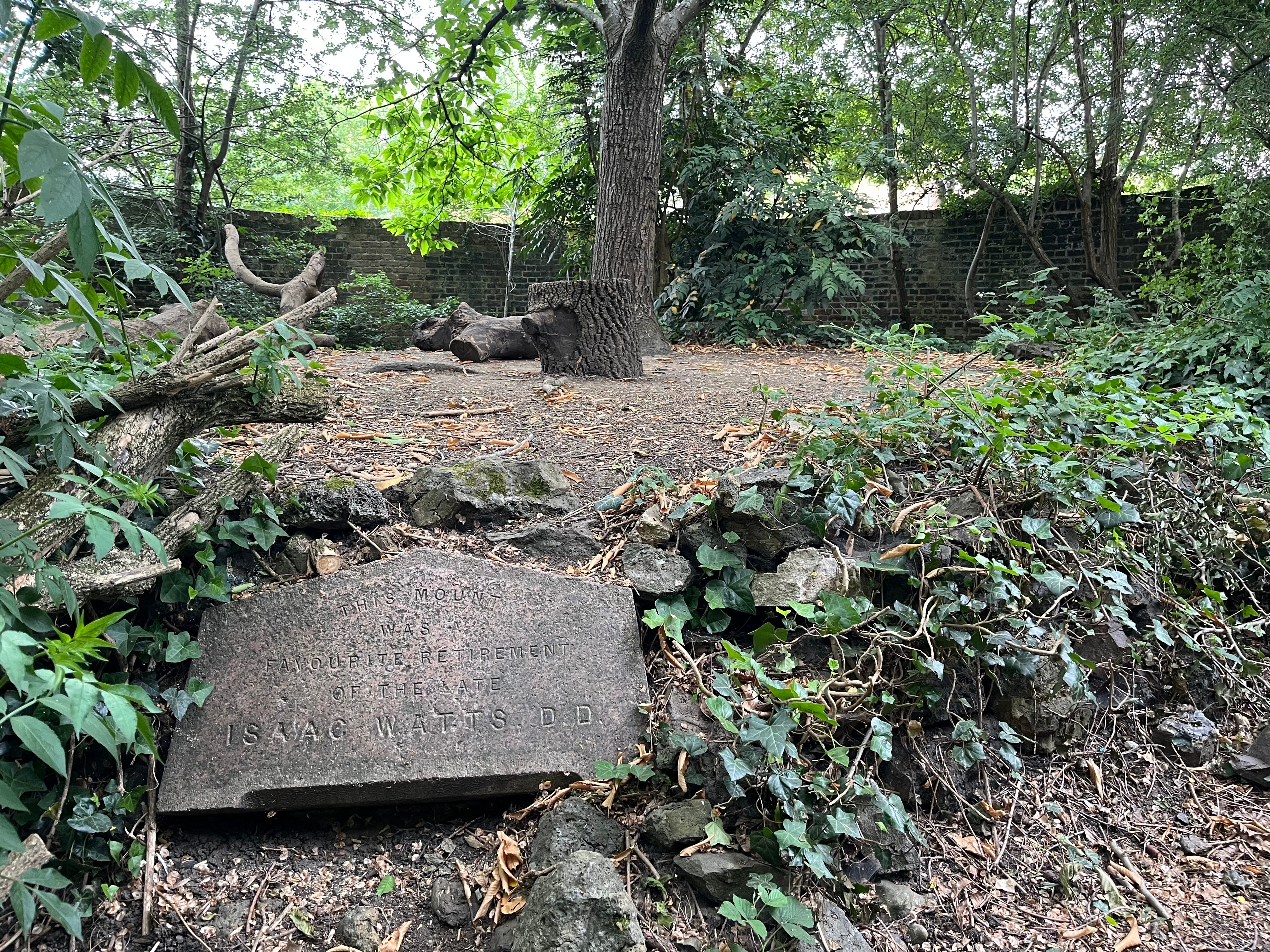
Watts was known to enjoy the gardens, and would often sit on a still-extant mound in the northeastern corner under a no-longer-extant horse chestnut tree. The mound is now known as Watts’ Mound, and it seems to be one of the few spots in the cemetery without burials underneath it.
After Lady Abney’s improvements to the gardens, the land behind the two houses became known as Abney Park. Students at Newington Academy enjoyed access to the park both before and after the cemetery was established.
The cemetery and its grounds
Following the passage of the 1832 Metropolitan General Cemetery Act, Abney Park began to be eyed as a potential site for a new cemetery.
There were likely a few factors behind this decision. Abney Park provided existing parkland easily adaptable to the garden cemetery model, and both families that had originally owned the two houses had functionally died out. Additionally, it was an ideal location for nonconformist burials, as it was located centrally to many of London’s nonconformists, Bunhill Fields was getting very close to full, and the land itself had a history of occupancy and use by iconic nonconformists.
George Collison II, a City of London solicitor, spearheaded the initiative to convert Abney Park into a cemetery. His vision was primarily inspired by a visit to Mount Auburn Cemetery, a nondenominational cemetery in Cambridge, Massachussetts. Most notably, Mount Auburn features an Egyptian Revival style entrance and a highly curated arboretum, both of which inspired Collison’s designs for Abney Park.
In the interest of getting to the actual cemetery, I’m going to handwave a bit about the establishment of the Abney Park Cemetery Company and the specific details of the cemetery’s beginnings. The important points are that Abney Park’s grounds were never consecrated by the Church of England, allowing for unsegregated burials;10 the cemetery was always at minimum a semi-public park in addition to a burial ground; and nonconformism remained central to the cemetery’s vision up until its closure in the 1970s.
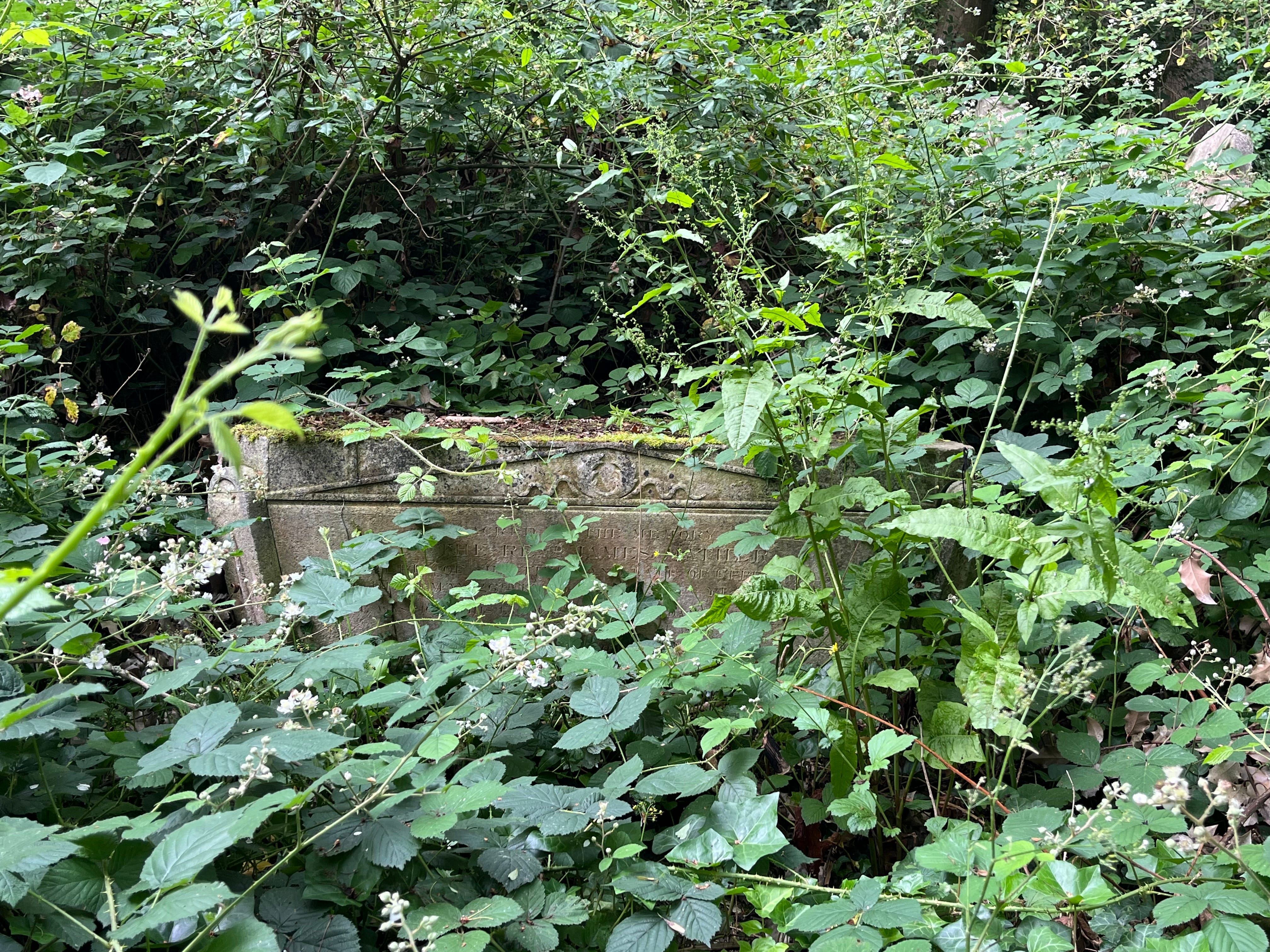
The cemetery opened its doors in late May 1840, with its first interment in June. A man named James Mather was buried just north of the chapel, and nearly 200,000 further burials succeeded him.
The chapel
A first-of-its-kind nondenominational chapel was constructed in the center of the cemetery. Traditionally, Christian churches are internally oriented towards the east (with a main entrance to the west). The most frequent deviations from this pattern are west-oriented (occidented) churches, likely drawing from the tradition of Greek and Roman temples, which were often oriented to the west (with east-facing entrances).11
Abney Park’s chapel, unusually, faces nearly due north. Aside from its design for use by those of any (at least Christian) faith, the reason for this deviation is simple and somewhat sentimental: a path between the site of Abney House and the chapel named for Dr. Watts.


The chapel’s architecture is also a blend of many different traditional architectural styles for churches. Aside from the varying tastes of the founders of the cemetery, this choice was an attempt at encouraging religious harmony (by including as many different styles as possible) and avoiding insinuating the specific religion that would be “most welcome”. As a result, the chapel is an early example of a new style that came to be known as Dissenting Gothic.
The arboretum
Abney Park’s founders wanted their cemetery to be educational in addition to beautiful. Neighboring Hackney was, at the time, home to many fine plant nurseries, and George Loddiges, a particular nurseryman, took charge at Abney Park.
His ambitious plan for a beautiful yet educational landscape?
An alphabetical arboretum.
Loddiges plotted out where to plant 2,500 trees and shrubs so that their scientific names progressed alphabetically around the cemetery’s perimeter – beginning with A for Acer (maple trees) and ending with Z for Zanthoxylum (American toothache trees). Each plant was labeled, so any casual visitor could keep track of where they were in the alphabet.


Unfortunately, Loddiges’ nursery went out of business in 1854, so the landscape’s maintenance slowly fell by the wayside. Additionally, in 1890, many of the original trees were removed to create space for more burials. As time went on and the cemetery’s business dwindled in the 20th century due to its swiftly decreasing capacity for new burials, garden maintenance was functionally abandoned, and a wilder ecosystem took root that has lasted to this day.
Closure and restoration
The cemetery operated continuously until the company went into liquidation in the late 1970s. Path infilling had begun in the 1950s, which led to extreme crowding and immense natural overgrowth. It then came into the possession of Hackney Council, who have been working (on and off in conjunction with the Abney Park Trust) to maintain and preserve the cemetery to this day.
In 2009, the cemetery was placed on Historic England’s annual Heritage at Risk Register. The move prompted funding for some needed work on the site, as it was inaccessible and parts of the grounds had become quite dangerous.
In particular, the chapel had fallen into disrepair due to a fire some time in the late 20th century. It had been derelict for around 30 years by the time the cemetery was put on the Register. Thankfully, its roof was repaired in 2017, and a full restoration took place from 2021-2024, making it once again an accessible, usable space. As a result, Abney Park became one of the first places to be removed from the Heritage at Risk Register! Unfortunately, the chapel was closed the day I visited, but it’s open to visitors at least once a month.
Few burials have occurred since 1979 (when the cemetery company formally closed), though some still occur annually. The most recent burials I spotted were from the 2010s, though I suspect I wasn’t looking closely enough at all of the graves.
The cemetery today
Now, Abney Park Cemetery is a quiet pocket of nature set against busier surroundings.
Nature and artifice
I find the cemetery itself to be a place of juxtaposition.
The idea of the garden cemetery juxtaposes the living and dead – the living enjoying natural surroundings above the buried dead – though Abney Park’s implementation of the garden cemetery philosophy also inverts the expected relationship between the natural and the artificial. Typically, you’d expect plants and animals to be naturally distributed and wild in a forested space, while digging a hole, burying a body, and popping a headstone on top would be an artificial disturbance to that more “natural” space.
However, at Abney Park, the “natural” vegetation is so curated that, in a sense, it is more artificial than the bodies buried beneath it. The garden’s abandonment and regrowth has allowed it to develop into a unique woodland with many species found almost nowhere else in England, though many plants have become deeply poisonous due to the arsenic, lead, and other toxic materials used for preservation in the Victorian era.


Thoughts of the artificial versus the natural kept bouncing through my mind as I explored the park. Most strikingly, there are many patches of gravestones that have been massively disturbed or overgrown by tree roots, which would typically appear to be nature striking back at these artificial, human monuments imposed upon it. But if the trees themselves are technically impositions upon the natural landscape, what really should be the “natural” result here?
Burials and monuments
Much ink has been spilled on Abney Park’s famous burials, so instead I’m going to touch on some patterns I noticed in funerary monuments around the cemetery. The vast majority of burials at Abney took place in the 1850s – 1890s, and hence the vast majority of grave monuments are rich with elaborate iconography typical of Victorian tastes.
Neoclassicism and Egyptomania were deeply in vogue, though some of these consistent motifs harken back to other histories.
Broken columns
These seem to appear in a few pockets of the cemetery and are somewhat rarer than the other symbols discussed below. Per the many websites on Victorian funerary iconography, broken columns often symbolize a life cut off too soon – usually that of a family’s primary breadwinner. An unbroken column apparently symbolized a “noble life”. These column memorials are probably the simplest neoclassical motif in the cemetery.
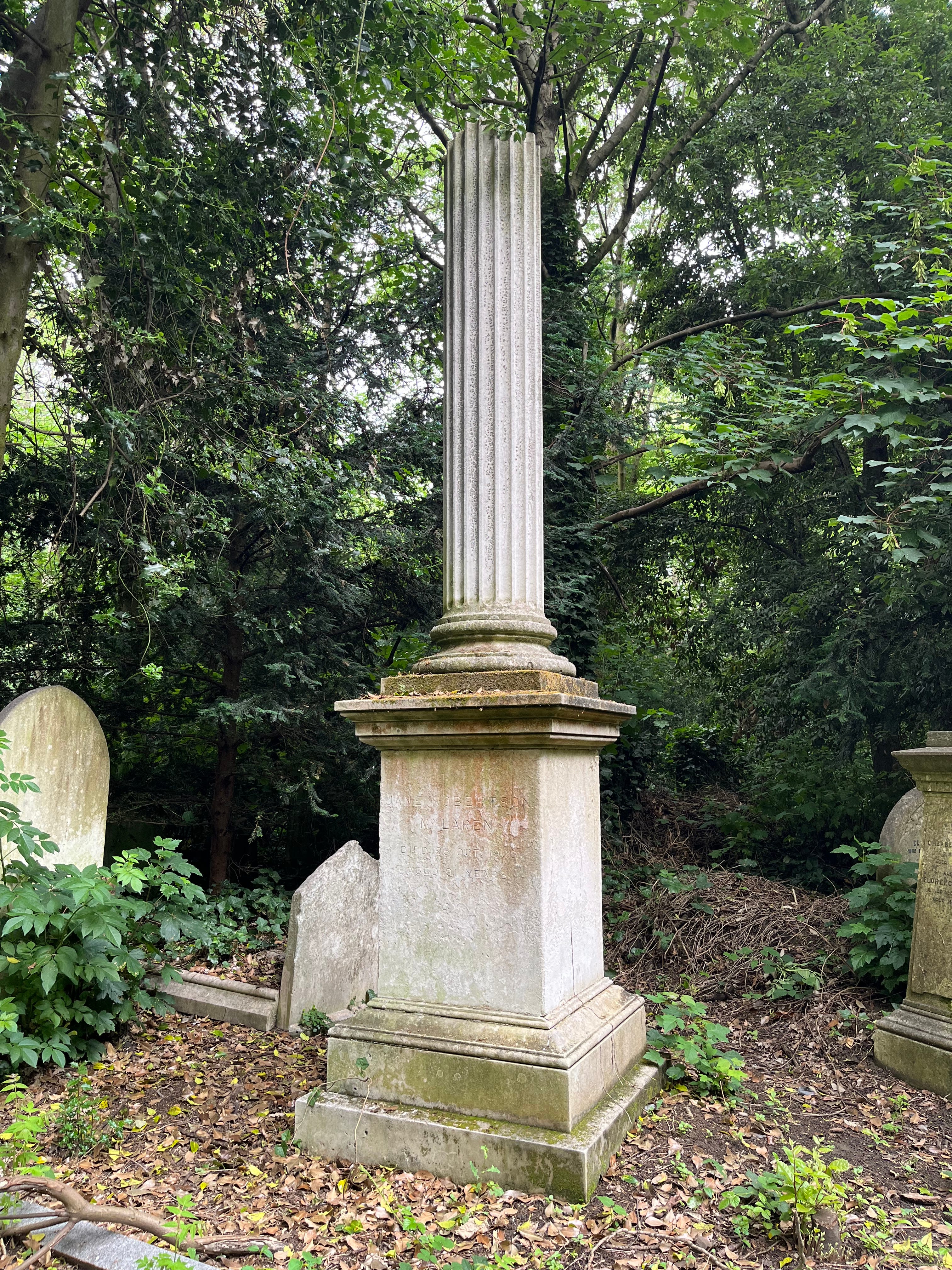
The original idea of the fluted column came from the ancient Greeks transitioning from building temples out of wood (where the columns would be tree trunks) to marble. Marble temples were thus a kind of fossilized, immortal version of their wooden predecessors, and I was reminded of this moment in architectural history by the trees and stone columns set against each other.


Celtic crosses
These are a bit more frequent than the broken columns. The 19th century also marked the beginning of a movement called the Celtic Revival, consistent with the general turn towards the past of neoclassicism and Egyptomania, though a bit more local. Celtic crosses first became a popular funerary motif during this period, and it’s no surprise that a nonconformist area would have a higher quantity of these overtly non-Anglican symbols.


Salvation Army shields
The Salvation Army was established by nonconformists in the 19th century, so, when founders Catherine and William Booth died (in 1890 and 1912, respectively), they were buried in Abney Park and began a long tradition of Salvation Army burials in the cemetery. Some monuments, like theirs, are simply giant versions of the Salvation Army shield with inscriptions relevant to the deceased. Others are more traditional grave monuments (sometimes featuring the other symbols in this list) with the shield also inscribed on them somewhere.


Veiled urns
Veiled urns are one of the most obvious neoclassical knockoffs in Victorian cemeteries. These urns are often roughly amphora-shaped, and most have some sort of shroud partially covering them.
Interestingly, many of the amphorai I spotted in Abney Park are shaped more like the Panathenaic prize amphorai – giant jars of olive oil given to winners of the Panathenaic Games – than anything associated with actual funerary or cinerary urns from Athens12 or Rome. I have a feeling that this motif was coopted more from battle– and victory–related ancient sculpture than funerary sculpture.
Some sources on Victorian funerary imagery say that these monuments are supposed to reference ancient cinerary urns, which may have been the intention of the time, but I would also not be shocked to hear that these were supposed to symbolize deaths in the name of victory. Given the number of war-related deaths present in the cemetery, the combination of a shroud (at this point pretty much a universal symbol of death) and an icon of victory is a bit more logical. This meaning may have been lost over time as the veiled urn became more popular as a funerary symbol.
I know this is all conjectural, but, as much as we love to point and laugh at stupid things the Victorians did,13 I’d like to believe that there could be a more earnest reason for this mix-up to have happened. To be fair, it’s also possible that not many ancient Greek and Roman cemeteries had been excavated by this point in time and the differences between different types of amphora were not as rigorously identified and catalogued.
Obelisks
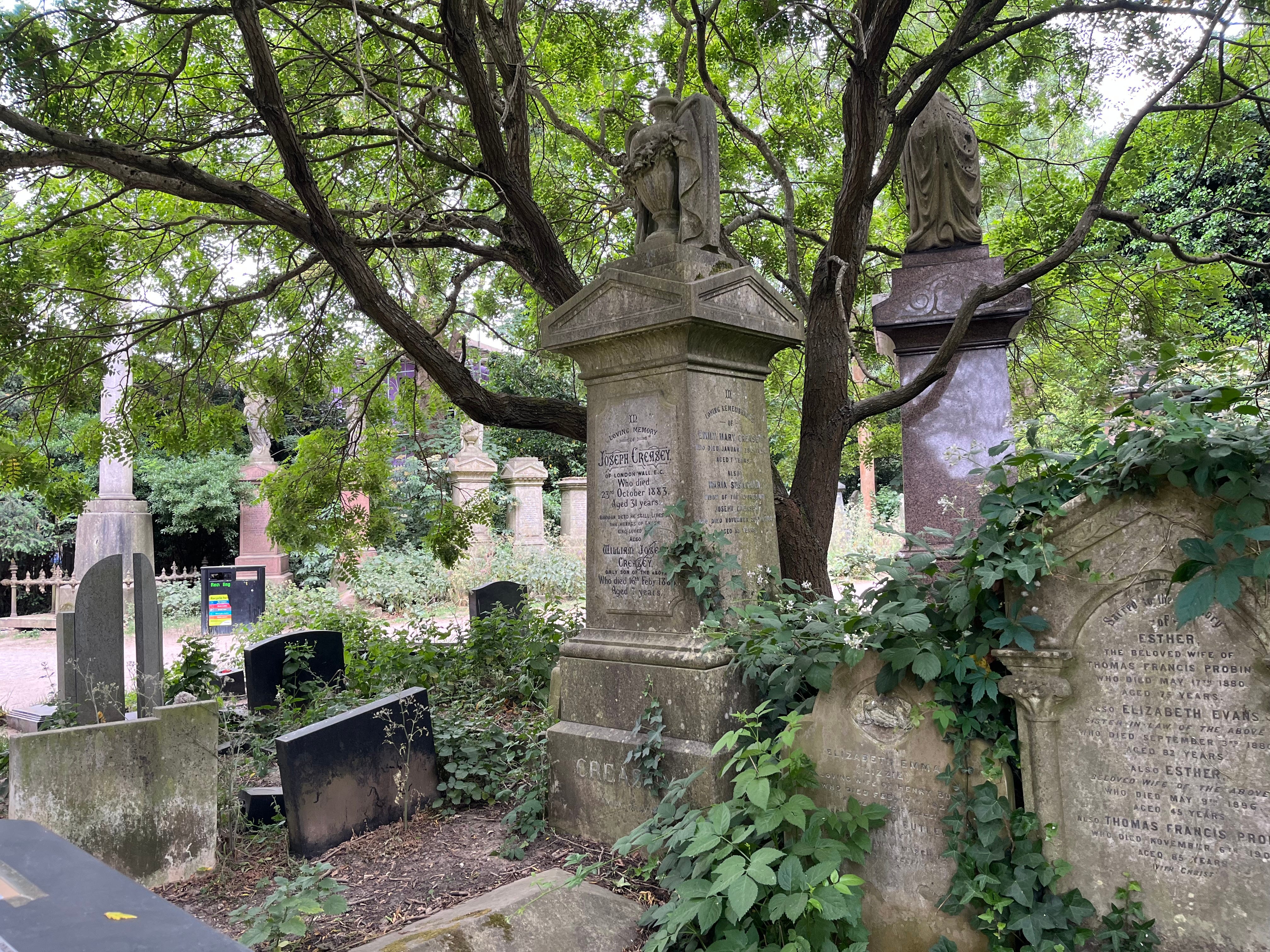
Likely popular both due to the cemetery’s Egyptian Revial styling and the general Egyptomania of the Victorians, obelisks are everywhere at Abney Park.


According to some Victorian cemeteries’ websites, obelisks were particularly popular among nonconformists due to feelings that the cross was too Catholic.
Many of Abney Park’s obelisks also are variations on the traditional plain obelisk – most notably, one is topped with a hand pointing up, which the cemetery’s signage notes as a signifier of the ascent to heaven. Others make use of the neoclassical adaptation of the victory wreath, and more invoke other imagery still.


Clasped hands
You’d expect a Victorian cemetery to be full of images of skulls and bones and various other morbid things, but Abney Park is actually quite full of handshakes.
Clasped hands are considered to be representative of familial love or romantic partnership on Victorian headstones. Though disembodied hands may seem like an odd choice for a headstone, this motif may have ties to far more ancient funerary imagery.
Dexiosis, or the giving of the right hand, is an artistic motif dating at least to ancient Greece. It’s most frequently found carved on grave monuments and painted on libation vessels, and there is still significant scholarly debate as to what it specifically represents.
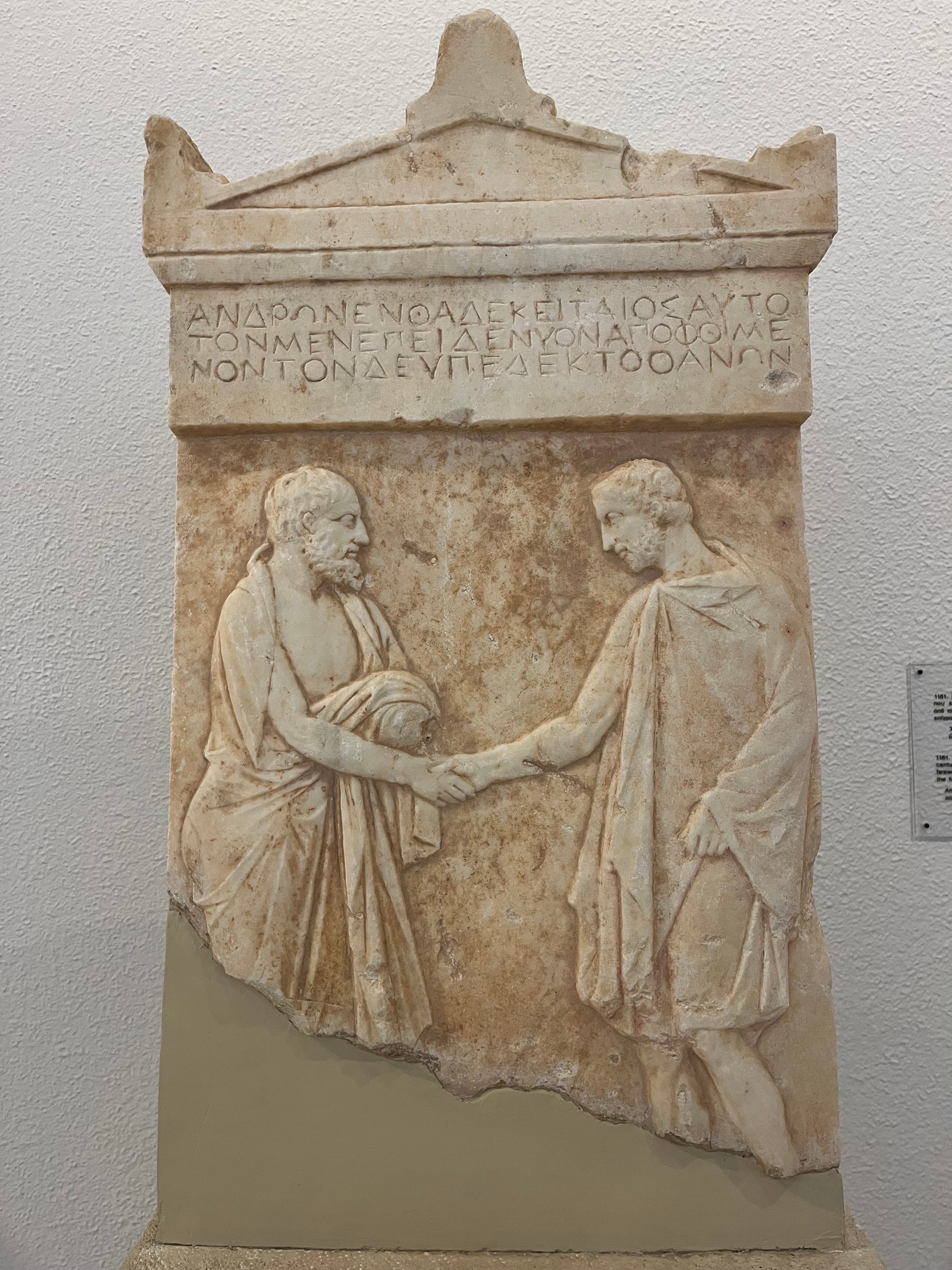
At its core, dexiosis pretty much just looks like a handshake. It’s often represented as between the living and the dead or the divine and the mortal, though (like all rules) there are many exceptions to these cases. If you visit an ancient Greek cemetery or archaeological museum, you’ll see hundreds of examples of dexiosis executed in all sorts of ways.
Some scholars interpret dexiosis as a farewell, others a transgressive bridge between spheres that otherwise do not intersect. Rather than choose a specific interpretation, I’m inclined to believe that its versatility is what helped dexiosis become extremely common in ancient Greek funerary art.
I wonder if the Victorian clasped hands can be traced back to the Greek handshake – as ancient Greek artifacts were quite popular at the time, dexiosis would be an easy pattern to spot and apply modern meaning to. Since “preservation” methods of the period for marble artifacts were often more harm than help and Greek funerary monuments were generally rather sparse on the text front, reading dexiosis as more symbolic of human relationships than a bridge between worlds is understandable. Reducing the focus of a dexiotic image to the hands alone for a headstone is a) much more budget-friendly, b) clearer about the point of the image, and c) less likely to collapse or erode.
Do keep in mind that the above is mainly educated conjecture, but I think it’s a worthwhile potential lineage of this funerary motif to consider.


Mass burials
You might be looking at these immense and elaborate memorials and wondering how in the world the average person afforded a burial in Abney Park’s heyday. The sad answer is that most people were buried in mass, unmarked graves, and sometimes their living relations would set up a tiny headstone with their name and the relevant dates of their life. These almost child-sized headstones appear in rows in pockets of the cemetery, some with dates as recent as the 1970s.


Alternatively, many plots were often reused by members of the same family, and inscriptions were added to an often-plain headstone, as seen in many of the monuments in my other photos.
Modern memorials
If you want to be remembered in Abney Park but didn’t buy a plot before 1979, there’s still hope. A smattering of modern memorials have cropped up around the park in recent years. Some of these are small signs near significant trees, but the vast majority are honorary benches.
The most intriguing of these benches simply bears a name, a quote, and a QR code.


It turns out Mark Bridgeford was a local musician who passed unexpectedly a few years ago, and the QR code links to a song he wrote that his band performed.
Location details
Abney Park Cemetery
Stoke Newington High Street
London N16 0LH
Open daily 08:00 – dusk (20:30 in summer)
https://abneypark.org/
Further reading
While researching Abney Park, I came across a variety of interesting sources. I couldn’t include all of them due to how lengthy the piece was already becoming, so below are some recommendations if you have further curiosity to sate!
Abney Park Cemetery’s Historic England entry
London Parks & Gardens’ entry on Abney Park Cemetery
The Museum of London’s historical overview of Abney Park Cemetery
The Abney Unearthed project
More details on the ecology of the site
A 2008 London Naturalist article on the bizarre ecology of the cemetery’s trees and woodland
The British History Online volume on Islington and Stoke Newington
What is and isn’t “London” is a really complicated topic that I don’t have the time or space to get into here – this video by Luke O’Sullivan is a good primer on the subject. If you want more details on the boundaries of Greater London as they stand today, check out this video by Jay Foreman (as well as the rest of his Unfinished London series).
I say “largest” because other cemeteries were also established around the same time as the Magnificent Seven. The only connections between these specific seven cemeteries are that they owe their establishment solely to the 1832 Act and that they’re all laid out as garden cemeteries. The people involved in founding each of the seven cemeteries were different (barring an architect or two shared between a couple of cemeteries).
I’m aware that Dissenters and nonconformists aren’t quite the same thing, but for the purposes of this piece these terms are used interchangeably.
The manor house was in the process of being rebuilt when Thomas Gunston (Lady Abney’s brother) died, and its being left to her to complete is what earned it the name of Abney House.
Most famous for being one of Oliver Cromwell’s generals – there’s a lot going on here that I simply don’t have the space/time to get into!
Stoke Newington’s Dissenters were often Quakers, and these Quakers were also major figures in the British abolitionist movement.
Among his most famous hymns is “Joy to the World”, though it originally had a very different tune.
Despite its famously being an Anglican institution.
The Puritans are probably the most well-known Dissenting group when it comes to the colonization of North America.
Unlike the rest of the Magnificent Seven, where Anglicans and dissenters had their own separate burial grounds.
Greetings from part one of Did You Know I Have A Degree In Classics?
Athens is a special case when it comes to ancient Greek cinerary practices.
Like using so much arsenic that all of the plants in Abney Park are inedible.